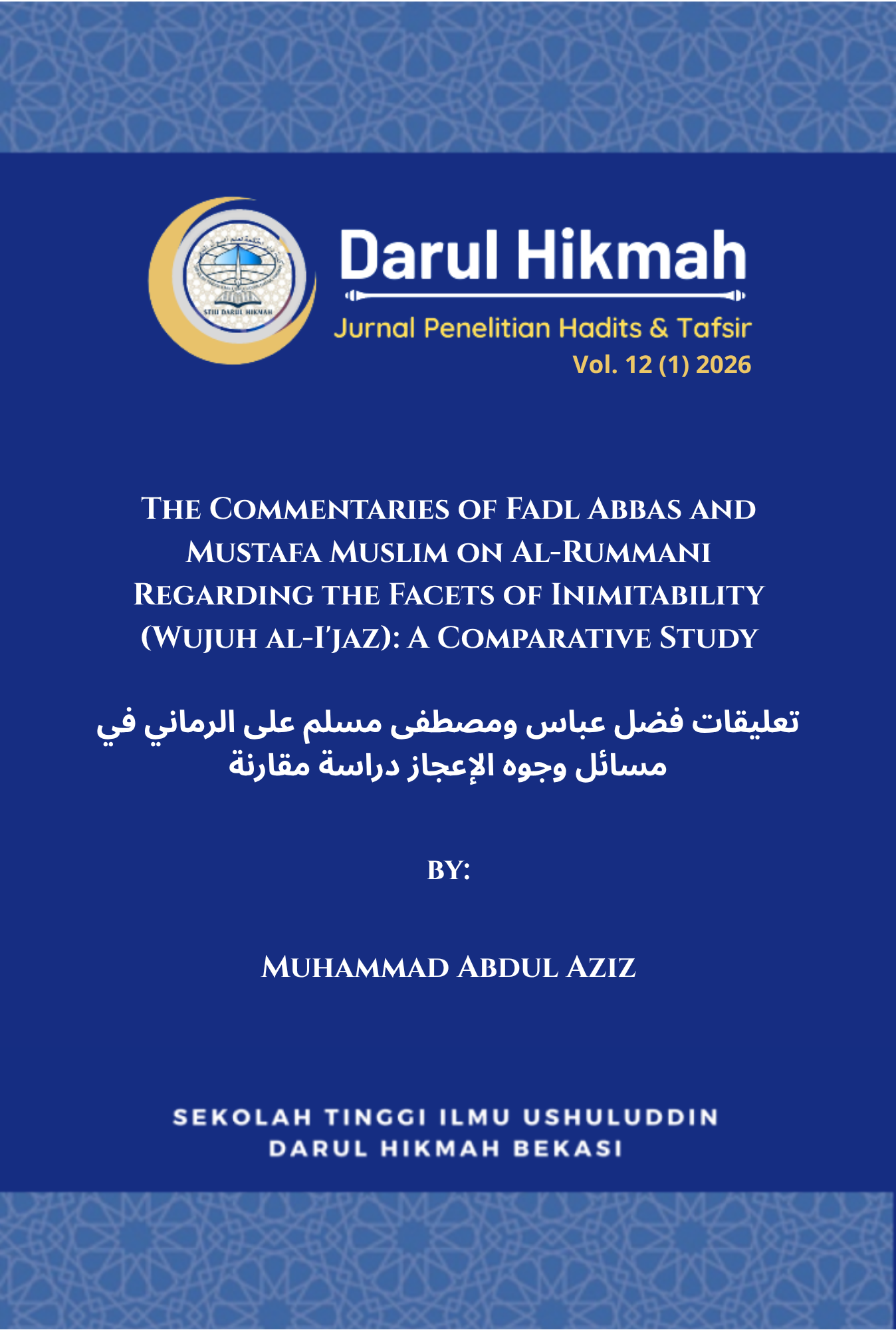
تعليقات فضل عباس ومصطفى مسمل عىل الرماين يف مسائل وجوه ا لجعاز : دراسة مقارنة
DOI:
https://doi.org/10.61086/jstiudh.v12i1.98Keywords:
Wujuh al-I'jaz, Al-Rummani, Fadl Abbas, Mustafa Muslim, SarfahAbstract
يهدف هذا البحث إلى تقديم دراسة مقارنة تحليليّة لتعليقات الأستاذين الدكتور فضل حسن عباس والدكتور مصطفى مسلم على رسالة "النكت في إعجاز القرآن" لأبي الحسن الرماني المعتزلي. تبرز أهمية الدراسة في تفكيك المقولات البلاغية والعقدية للرماني وإعادة تقييمها بمنظور معاصر. اتبع البحث المنهج المقارن التحليلي. وتوصلت الدراسة إلى نتائج جوهرية؛ أبرزها أن د. فضل عباس نجح في رفع التناقض المدعى على الرماني في جمعه بين البلاغة والصرْفة، مبيناً أنه يتبنى المذهب الثاني للصرفة (سلب العلوم والهمم عند المعارضة) الذي لا يتناقض مع القول بالبلاغة الإعجازية الذاتية، وهو ما يخرجه من زمرة النَّظَّام. بينما ركزت المحاكمة العلمية في مسألة السجع على ضرورة التمييز المتين بين السجع المتكلف المذموم وسجع الفواصل المحمود المبني على اتساق المعاني تنزيهاً للقرآن عن مشابهة كلام الكهان وسجع الحمامة عند المعتزلة.
Downloads
Published
Issue
Section
License
This work is licensed under a Creative Commons Attribution-NonCommercial-ShareAlike 4.0 International License.
You are free to:
- Share — copy and redistribute the material in any medium or format
- Adapt — remix, transform, and build upon the material
- The licensor cannot revoke these freedoms as long as you follow the license terms.
Under the following terms:
- Attribution — You must give appropriate credit, provide a link to the license, and indicate if changes were made. You may do so in any reasonable manner, but not in any way that suggests the licensor endorses you or your use.
- NonCommercial — You may not use the material for commercial purposes.
- ShareAlike — If you remix, transform, or build upon the material, you must distribute your contributions under the same license as the original.
- No additional restrictions — You may not apply legal terms or technological measures that legally restrict others from doing anything the license permits.
Notices:
You do not have to comply with the license for elements of the material in the public domain or where your use is permitted by an applicable exception or limitation.
No warranties are given. The license may not give you all of the permissions necessary for your intended use. For example, other rights such as publicity, privacy, or moral rights may limit how you use the material.